 What's trending, explained.
What's trending, explained.
What's trending, explained.
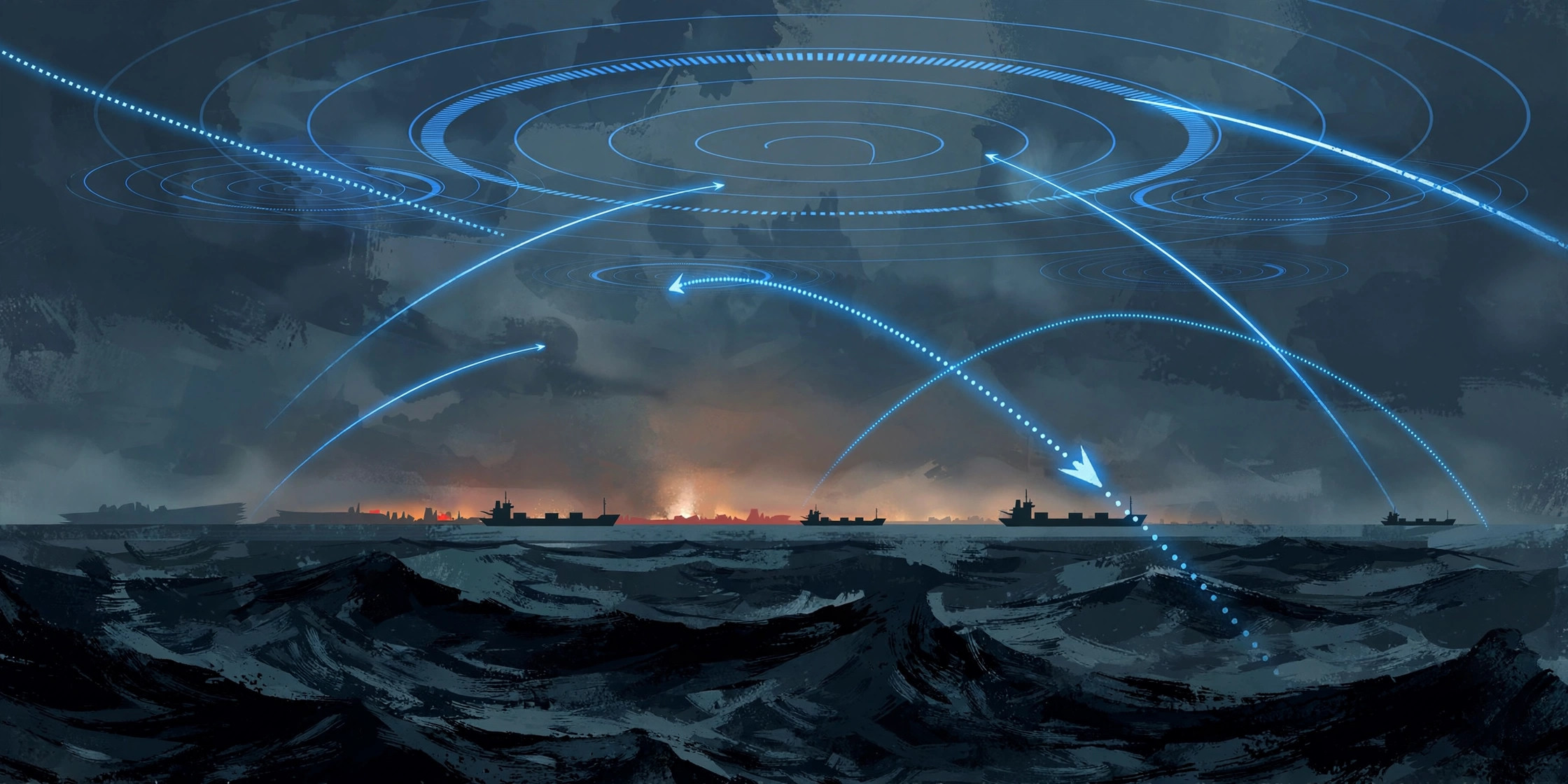
Bulgaria has formally asked NATO to come to the Black Sea. Defense Minister Dimitar Stoyanov said on October 16 that Sofia sent letters to NATO Secretary General Mark Rutte and the Supreme Allied Commander requesting the deployment of combat aircraft and anti-drone systems, after a string of drone attacks on commercial shipping in waters claimed by NATO member states.
The attacks have been escalating for weeks. On Tuesday, a commercial vessel sank off Bulgaria's Black Sea coast following a drone attack, prompting Sofia to summon Russia's ambassador. Within the last 24 hours between October 14 and 15, drones set two chemical tankers ablaze off Romania's coast: the San Marino-flagged Wine Trader, from which five crew were rescued while seven sailors were still missing, and the Comoros-flagged Yara J, whose crew was fully rescued and accounted for. Russian drones were detected in Romanian airspace during the strikes. At least seven vessels have been attacked this month in the exclusive economic zones of NATO members Romania and Bulgaria, and NATO fighter jets have scrambled across Romania, Poland, Germany, Belgium, and France in response to drone incursions.
Rutte met Bulgarian Prime Minister Rumen Radev and Romanian President Nicușor Dan on Thursday, saying afterward that NATO would "continue to work closely with our Allies in the Black Sea, adjusting our deterrence and defence posture as needed." A NATO official said alliance ambassadors would discuss Bulgaria's request next week. Stoyanov said he plans to meet his Romanian and Turkish counterparts soon to coordinate a common approach, and Bulgaria also expects to join a NATO anti-drone initiative by the end of October. Separately, Sofia has proposed a moratorium on attacks on civilian ships in the Black Sea.
The crisis reached the European Council summit in Brussels on October 15, where EU leaders discussed restoring safe passage for grain cargo ships. Politico reported that insurers and investors are weighing the cost of operating through the region, and an EU shipping representative noted that shipping traffic has fallen as the security risk has grown.
The Black Sea is becoming the sharpest test of how far Russia will push against NATO's eastern flank without triggering a direct military response. The drones are not hitting military targets — they are hitting civilian grain and chemical tankers in the waters of alliance members, a pattern designed to pressure Ukraine's export economy and European energy costs while staying just below the threshold of open confrontation. Shipping insurers are already repricing the risk, and grain shipments through ports that handle around 95 percent of Ukraine's grain exports are slowing.
The escalation also connects to the wider war. Ukraine resumed targeting Russian oil refineries after Moscow's continued strikes on Ukrainian energy sites rendered Trump's self-styled "energy ceasefire" moot, and both sides are now fighting over the infrastructure of trade and energy. At the Brussels summit, Bulgaria's Radev — whose new government has pulled back from prior arms-shipment policy toward Ukraine — broke with most EU leaders by opposing Ukraine's refinery strikes, a split that reveals how the energy pain is dividing Europe.
For NATO, the request forces a concrete decision. Deploying combat aircraft and anti-drone systems to Bulgarian territory would be the alliance's most visible response yet to the drone campaign, but it also moves NATO assets closer to a hot zone where miscalculation carries real risk.
The immediate decision point is next week, when the ambassadors of the alliance's 32 member states take up Bulgaria's request. If approved, deployments could begin quickly — the framework of NATO's Black Sea posture already exists; what is missing is the hardware. The planned Romanian-Turkish coordination meeting and Bulgaria's entry into the NATO anti-drone initiative by the end of October will show whether the response is bilateral patchwork or alliance-wide.
Two risks bear watching. The first is the winter grain and energy shipping season: any further attacks will push insurance and freight costs higher across Europe. The second is escalation: Russian drones entering NATO airspace repeatedly is the kind of pattern that eventually produces a shootdown — and a shootdown of a Russian drone by a NATO jet would be a moment the alliance's careful calibration has so far avoided.