 What's trending, explained.
What's trending, explained.
What's trending, explained.
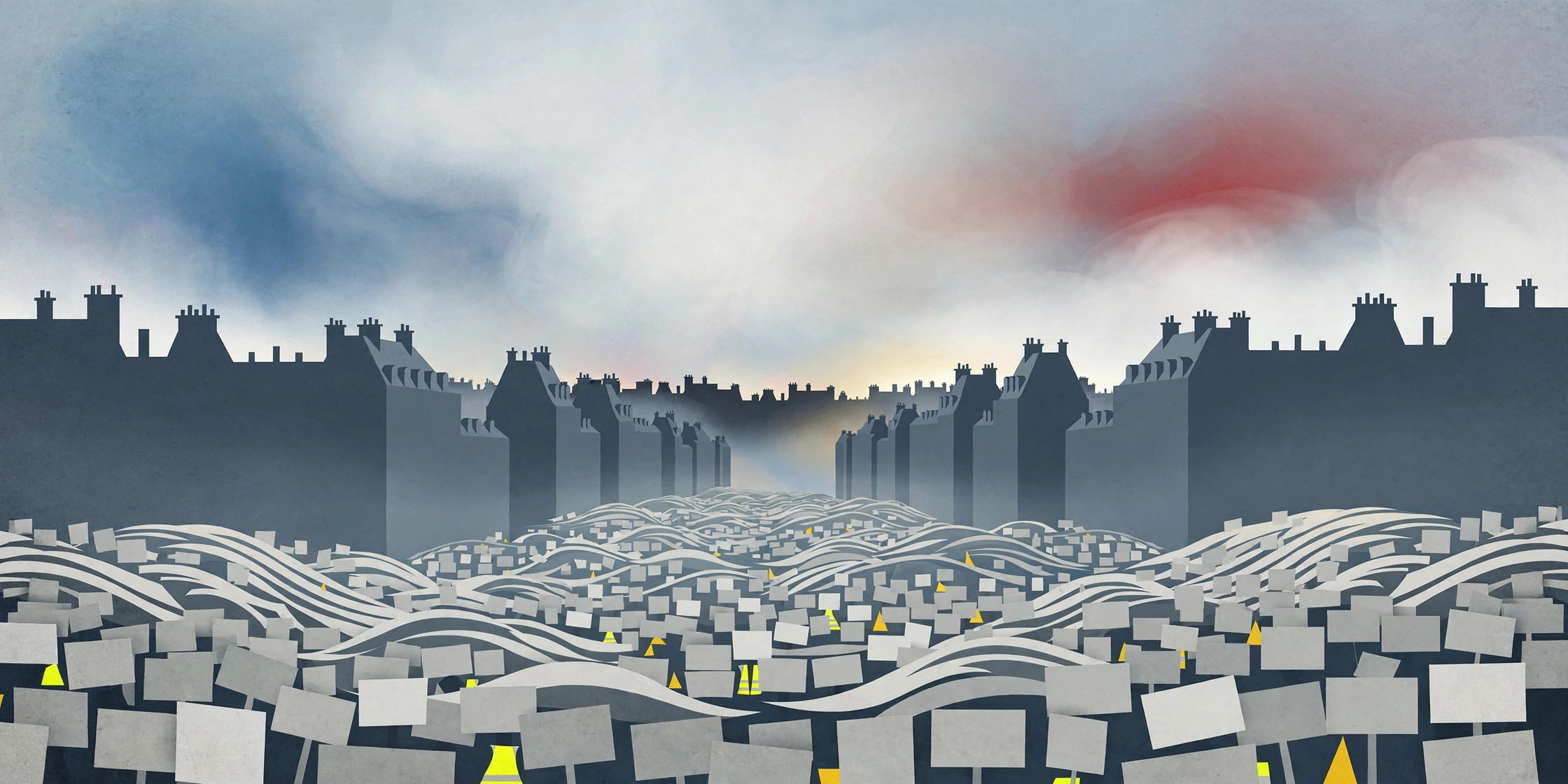
France is bracing for one of its largest protest days in recent years. On Saturday, October 17, tens of thousands of people are expected to take part in hundreds of demonstrations across the country, as three separate currents merge into one: student protesters, trade unions and veterans of the Yellow Vest movement, all rallying against high prices and what they describe as France's fraying social model.
The movement started small. Last month, high schools in Paris's poor northern suburbs erupted over teacher absences and dilapidated facilities. That local anger quickly spread and mutated into a nationwide campaign against inequality, weak public spending and falling standards. Since then it has broadened further: the CGT union, the farmers' union Confédération paysanne and Gilets Jaunes veterans have all joined, and authorities are anticipating road blockades, school occupations and rallies in major cities as well as rural areas.
The government is treating the day as a security event. Interior Minister Laurent Núñez has authorized riot police to deploy water cannon, rubber bullets, tear gas and stun grenades if authorities judge there is "urban violence," and did not rule out reintroducing flash-bang grenades, whose use was temporarily suspended after a 15-year-old was severely injured. Police were deployed along the Champs-Élysées early on Saturday, with shops boarding up storefronts. Prime Minister Sébastien Lecornu has convened an interministerial crisis cell, saying authorities fear unrest.
The backdrop is a country under strain. President Emmanuel Macron is entering the final stretch of his presidency, leaving behind a polarized electorate and fragmented politics. Investors have been selling French debt, pushing borrowing costs to their highest levels in more than two decades, underlining the long struggle to repair public finances. "This is a moment of fatigue in the country," Lecornu said Thursday. "We are in an atmosphere of perma-crisis: wars, inflation, and issues surrounding purchasing power." The government blames the hard-left France Unbowed party for inflaming the protests — an accusation it denies. Opposition chief Jordan Bardella, whose far-right National Rally leads presidential polls, said he expected violence, calling it "a day of chaos for France." Macron himself said Friday that the right to protest is fully respected but must be accompanied by respect for people and property, and called for calm.
This is no longer a student movement; even the prime minister says it has slid toward "urban violence." The casualty figures explain the tension: Lecornu has called the protests among the most violent in decades, with more than 900 police officers injured since they began — while protesters and watchdogs point to injuries inflicted by police crowd-control tactics, including an adolescent whose hand was destroyed after picking up a stun grenade. The gap between official and activist tallies is itself fueling the domestic political fight over policing and legitimacy.
The convergence is what makes October 17 different. Students brought the numbers and the moral weight; unions bring organization and strike muscle; the Yellow Vests bring the memory — and the tactics — of 2018-2019, when confrontations with police over rubber bullets and stun grenades drew international condemnation. With France's 2027 presidential campaign effectively underway, every leader is racing to frame the day for their own narrative.
The immediate question is whether the day stays mostly peaceful or tips into the street battles authorities fear. The reauthorization of stun grenades and water cannon signals a sharper security posture, and security officials warn that the leaderless, decentralized structure makes infiltration by small violent groups harder to prevent.
Beyond Saturday, the movement's staying power is the real test. A one-day convergence is a warning; a rolling campaign of blockades and strikes would be a crisis — for a government already struggling with debt costs, a perma-crisis economy, and a president with fading political capital. October 17 will show whether France's separate angers have truly become one.