 What's trending, explained.
What's trending, explained.
What's trending, explained.
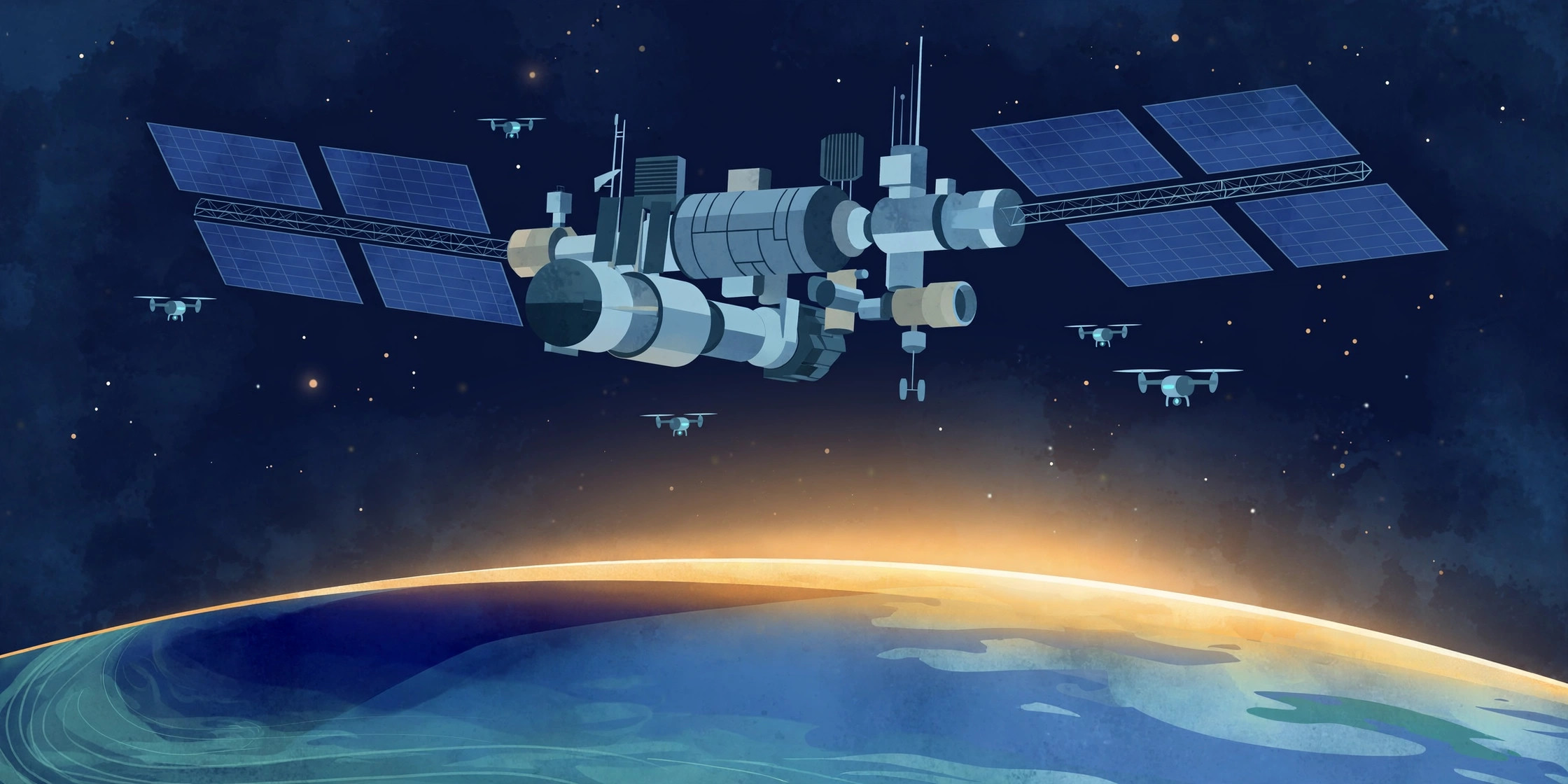
On October 9, 2026, NASA released a roughly 360-page request for proposals inviting American companies to develop commercial space stations. The stations are meant to take over from the International Space Station as the place where astronauts live and work in low Earth orbit, starting around 2030, when the ISS is expected to be retired and deorbited.
Under the plan, companies must submit their proposals by December 8, 2026. NASA intends to select two or more contractors in this first phase, with a final decision expected in April 2027. Each phase-one winner is guaranteed at least $100 million in funding for early development work. A second phase beginning in 2027 would cover development and certification of the stations, and later phases would purchase actual crew missions to the private outposts.
NASA Administrator Jared Isaacman said the agency is committed to keeping a continuous presence in low Earth orbit: "We have made it clear that NASA will never give up its presence in low Earth orbit." He explained that commercial stations would support research, technology development, and crew training while freeing up NASA's resources for missions to the Moon and Mars. Likely bidders include Axiom Space, Voyager Space with its Starlab project, and Vast with its Haven-1 station. Blue Origin's commitment is uncertain, and SpaceX appears unlikely to bid for now.
This is a structural shift in how America does human spaceflight. Instead of owning and operating its own station, as it has with the ISS since 1998, NASA plans to become a customer, renting space aboard privately built and privately run stations. The same model already transformed orbital transport, where NASA now buys crew flights rather than owning the rockets.
The timeline is tight for a reason. The ISS is aging, and without a working replacement before its planned retirement around 2030, there would be a gap in the continuous American crewed presence in low Earth orbit. Getting astronauts to the new stations is one of the hardest parts: NASA has even offered to provide transportation for the first four service missions to ease the burden on station builders.
The immediate milestones are the December 2026 proposal deadline and the contract awards expected in April 2027. This follows months of groundwork, including a December 2025 executive order directing an ISS replacement by 2030, a NASA framework called Ignition announced in March 2026, and a draft solicitation released in July.
The honest caveat is that space schedules frequently slip, and building a certified crewed station is far harder than building a rocket. The real test will be whether at least one commercial station is flying and operational before the ISS comes down. If the overlap works, 2030 will mark the moment low Earth orbit quietly changed owners, from governments to companies.