 What's trending, explained.
What's trending, explained.
What's trending, explained.
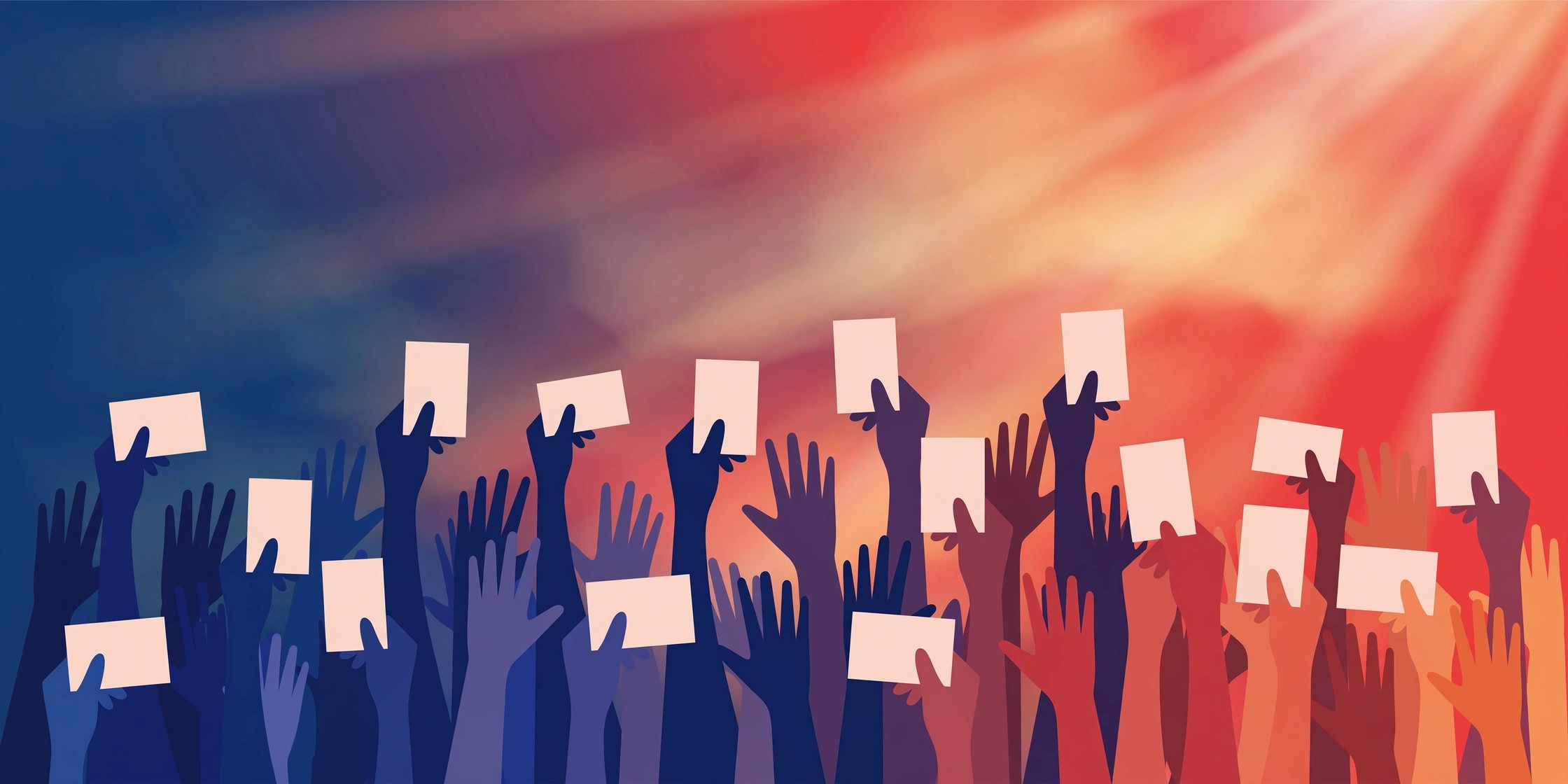
On Saturday, October 18, the "No Kings" movement returns for its fourth nationwide mobilization — but with a different playbook. Organizers say more than 3,000 "No Kings: Vote Early" marches and events are planned across all 50 states, and the theme this time is not just protest but turnout: helping people check their voter registration, make a plan to cast their ballot, and understand their voting rights.
"No Kings" is not a single organization but a coalition of hundreds of partner groups, including the ACLU and Black Voters Matter, with the progressive organizing network Indivisible at its core. The movement's premise is that Donald Trump's actions in his second term resemble those of a monarch rather than a democratically elected president — a claim Trump has rejected. Its website points to the administration's immigration crackdown, describing masked agents in the streets and detentions without warrants.
The shift from message to mechanics is deliberate. "The first three No Kings were designed to send a message," Indivisible co-founder Ezra Levin said. "We're done sending a message." The coalition's two goals for Saturday: help produce what Levin hopes will be the largest midterm early-voting numbers in US history, and get volunteers trained as poll watchers. That second goal is framed as a response to what organizers view as threats to election integrity — the failed SAVE America Act that would have required documentary proof of citizenship to register, concerns about immigration officers at polling places, and Trump's attempts to restrict voting by mail.
The first No Kings day, on June 14, drew more than 5 million people nationwide, coinciding with the Army's 250th anniversary parade and Trump's birthday. This round includes major rallies in anchor cities such as Boston, where Mayor Michelle Wu is expected to attend.
The reaction from the other side is sharp. House Speaker Mike Johnson has called the protests "hate America" rallies, and members of Trump's Cabinet have accused Democrats of prolonging the federal government shutdown so it would still be open for this weekend's demonstrations — a charge Democrats dispute.
The pivot matters more than the crowd count. The first three No Kings days were classic mass protest: visible, loud, and easy to dismiss as theater. This one is infrastructure. Voter registration drives, early-vote planning and poll-watcher training are the unglamorous machinery that decides close elections — and with the November 3 midterms less than three weeks away, both parties know that early voting is where modern campaigns are won.
It also sets up a direct collision. The shutdown is now on day 18, with negotiations frozen and the Senate set to vote again on the funding bill on October 20. Republicans are already tying the protests to the shutdown fight, which means Saturday's events will be read through that lens whether organizers want it or not.
The honest answer: nobody knows what the turnout will be until Saturday evening. Organizers' estimates have been optimistic before, and "historic turnout" claims only become verifiable after the fact. The more meaningful test is the one Levin set himself — whether early-voting numbers actually move in the weeks after the events.
Also watch the response. Federal law enforcement's posture around large demonstrations has been a flashpoint all year, and any confrontation in a major city would dominate the post-weekend news cycle. If the day passes peacefully and early-vote sign-ups jump, the "Vote Early" pivot will look like a shrewd evolution of street protest into electoral power. If it doesn't, the movement risks proving its critics right: that it is better at gathering crowds than changing outcomes.